People
Who works here
The lab is directed by Mikael Rubin and run day to day by a group of clinical psychology doctoral students at Palo Alto University. Everyone here is working on at least one of the lab's active projects, and most are running studies of their own alongside it.
Lab director
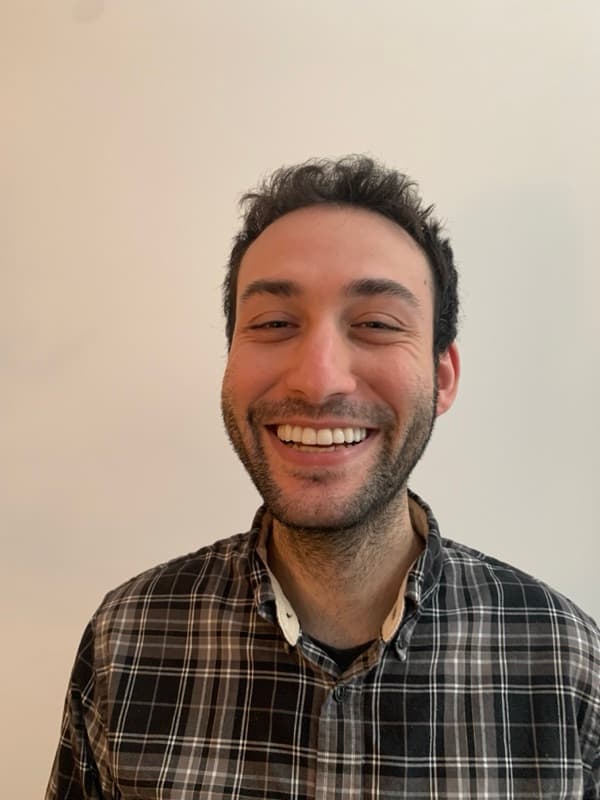
Associate Professor and lab director
Mikael directs the lab. His research is about attention: how to measure it properly, what it has to do with anxiety and trauma, and whether guiding it can be made into a treatment that works outside a laboratory. Much of that work runs through eye tracking, in virtual reality, in wearable trackers worn during real conversations, and through a webcam on a participant's own laptop. More recently he has been testing where large language models genuinely help with clinical assessment, and where they quietly do not.
He completed his PhD in clinical psychology at the University of Texas at Austin in 2022 and has been at Palo Alto University since. He is a licensed clinical psychologist in California, teaches the doctoral statistics sequence, and serves as an associate editor at JMIR XR and Spatial Computing and on the editorial board of the Journal of Traumatic Stress. His research is currently funded by NIMH, NIDA, and the American Psychological Foundation.
Doctoral students
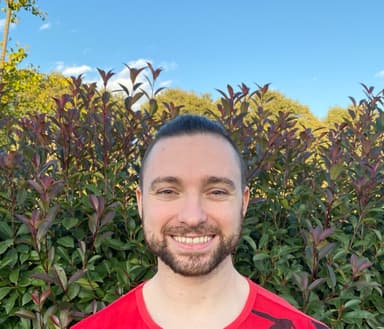
Bobby Hickson
5th year PhD student, on internship
Bobby works at the point where neuropsychology and anxiety research meet. His first-authored work asks how a mild traumatic brain injury changes the way attention is pulled toward threat, and he has used hidden Markov models to show that people with social anxiety are not one group with one attentional pattern but several. He is also part of the lab's work on measuring the therapeutic alliance with wearable eye tracking.

Dominic Burrows
5th year PhD student, on internship
Dominic's research is on trauma, domestic violence, and crisis intervention, with a particular focus on African American mental health. A good deal of his work comes back to the same question: treatments that are known to work only help people who are willing to walk through the door, so what makes that more or less likely?
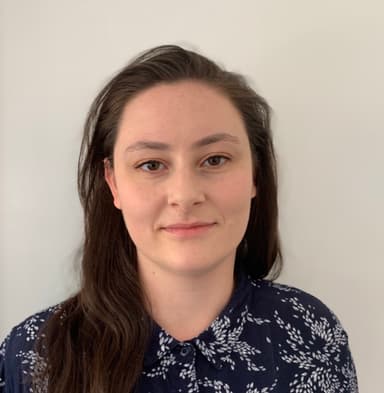
Natalia Siegel
5th year PhD student, on internship
Natalia studies risk and resilience in adult forensic populations. She is interested in what distinguishes people who do badly after serious adversity from people who do not, and in what that difference means for the assessments used to make decisions about them.

Caitlyn Grant
5th year PhD student, on internship
Caitlyn works on social cognition and emotion across the lifespan. In the lab she has used Markov models of eye movement to identify attentional profiles before treatment begins and to test whether those profiles predict who benefits from an internet-based intervention for social anxiety. She has also shown that attentional avoidance is related to how well people read signals from inside their own bodies.

Khyati Talwar
5th year PhD student, on internship
Khyati's research sits between health psychology and neuropsychology. Her recent work looks at psychological wellbeing in people living with knee osteoarthritis, which is a good example of the broader question she is interested in: how chronic physical conditions and mental health shape each other over time.
Coralea Lowe
4th year PhD student
Coralea is a doctoral student in the clinical psychology program at Palo Alto University.
Bradley Chamberlin
4th year PhD student
Bradley is a doctoral student in the clinical psychology program at Palo Alto University.
Zachary Andriella
4th year PhD student
Zachary is a doctoral student in the clinical psychology program at Palo Alto University.
Elizabeth Santos
3rd year PhD student
Elizabeth is part of the lab's work on large language models in assessment, including a study testing whether models small enough to run on a local machine can identify traumatic events and put posttraumatic stress symptoms in context from what people write about themselves.

Angel Lee
3rd year PhD student
Angel is a doctoral student in the clinical psychology program at Palo Alto University.
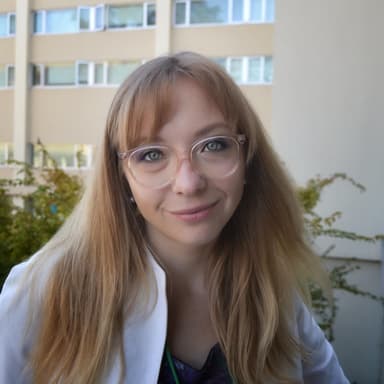
Elena Stuart
3rd year PhD student
Elena is a doctoral student in the clinical psychology program at Palo Alto University.
Armita Azari
2nd year PhD student
Armita works on the lab's audio-vocal research, asking whether features of the voice are related to where people direct their attention. She is a doctoral student in the clinical psychology program at Palo Alto University.
Maya Shustik
2nd year PhD student
Maya is a doctoral student in the clinical psychology program at Palo Alto University.
Katherine Heightman
2nd year PhD student
Katherine is a doctoral student in the clinical psychology program at Palo Alto University.
Past lab members
Tamara Garcia, PhD
PhD 2026
Tamara was in the lab from 2022 to 2026. Her research was on health psychology, mindfulness, and ADHD, including work suggesting that mindfulness-based approaches to ADHD may do better when they are tailored to the particular subtype rather than applied uniformly. She is now a postdoctoral fellow at Kaiser Permanente.